Attraction #3: Kyoto Station (京都駅)
The Tourist Information Center (TIC) can be found in the station. The one-stop for all travel information you need in Kyoto city. The Japanese TIC is located on the 2nd floor, while the TIC catered to foreign tourists is located on the 9th floor. If you can speak a little Japanese though, I would recommend you to get information on the 2nd floor. Things you MUST get from the TIC:
1) Kyoto City Map
2) Kyoto Bus Map
You can also purchase a single day bus pass from the TIC too. For 500 yen only, you can travel as much as you want on the Kyoto city buses within most of Central Kyoto. To put the prices in perspective, a single trip ticket on a Kyoto city bus is 220 yen. By purchasing the pass and taking at least 3 rides, you have already earned your money back =)


The above chart shows information on the extent of the blooming of the Sakura trees in Kyoto.
It is updated everyday. If any row on the chart has all seven stickers, then that means the Sakuras in that particular place have fully blossomed, or otherwise known as "mankai (満開)".

Lunch at a restaurant in Kyoto Station. Oyako-don (親子丼) upsized for 770 yen.


Attraction #4: Kyoto Imperial Palace (京都御所)




One of my greatest regrets during my backpack trip: We didn't manage to make it on time for the palace tour, thus we could not enter the palace grounds. The pictures here were taken outside the palace walls. The gate above is the entrance to the palace grounds. Quite demoralizing, since the palace tours can only be arranged online through the Imperial Household Agency and most of the times it has to be at least a month in advance, if not three months. But the gardens outside the palace walls also had some dazzling sights, and served as a consolation for my disappointment.


In front of a weeping cherry blossom -
I think I did it a disservice by using just a normal digicam.
Almost all others who were there used DSLRs and cameras that looked like heavy artillery..


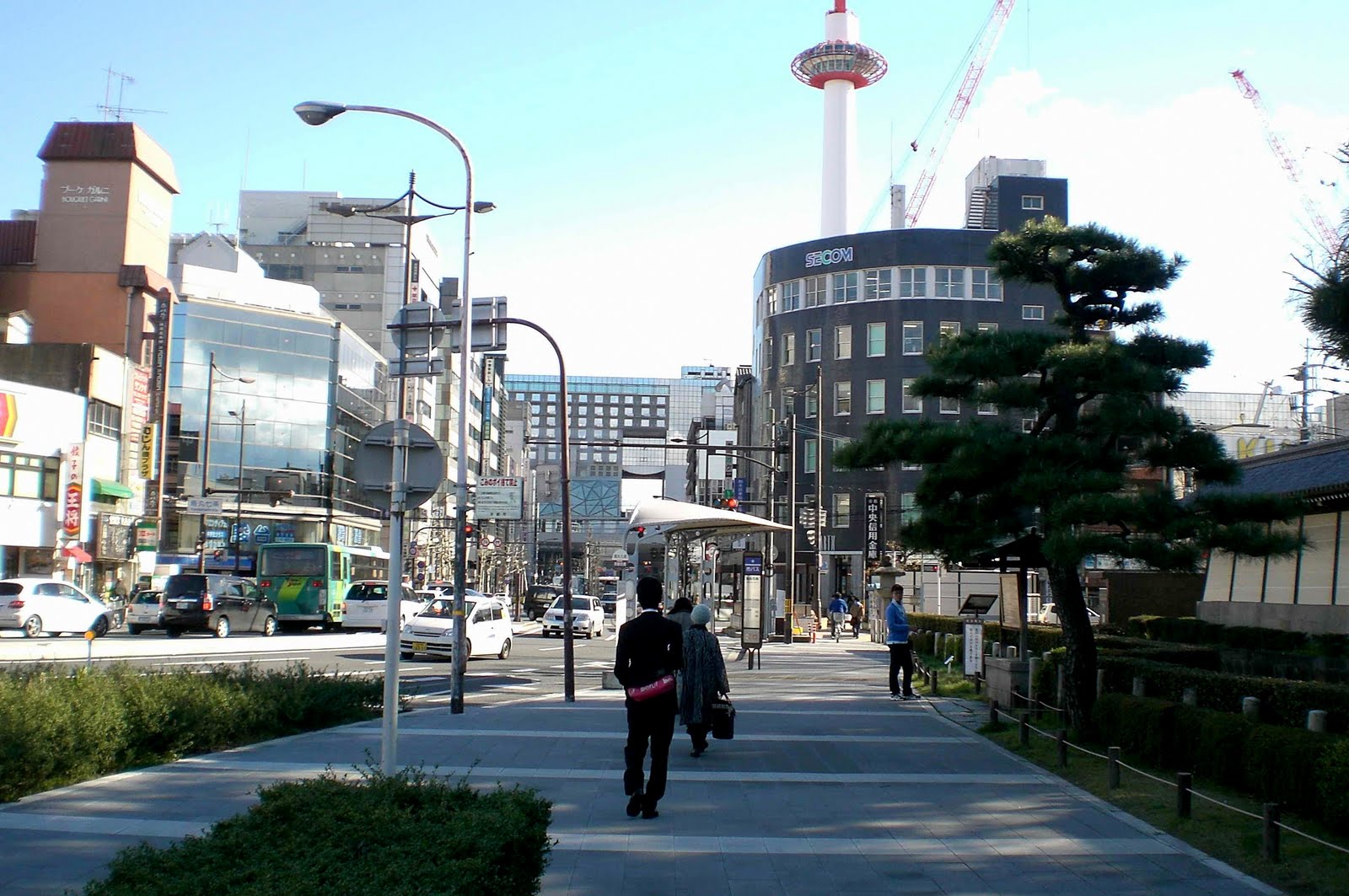
Walking back to Kyoto Station area; some random shots


Kyoto Tower in the distance


Attraction #5: To-ji (東寺)
This temple was also granted the status of UNESCO World Heritage Site. Its most prominent feature is the pagoda, which is one of the tallest in the whole of Japan and can be easily seen from far.


One of the two main buildings in the temple grounds. Houses many Buddha statues that date way back to the Hei-an period of Japan (about 1300 years ago!). Photography is forbidden inside though..

 Back to our capsules..